





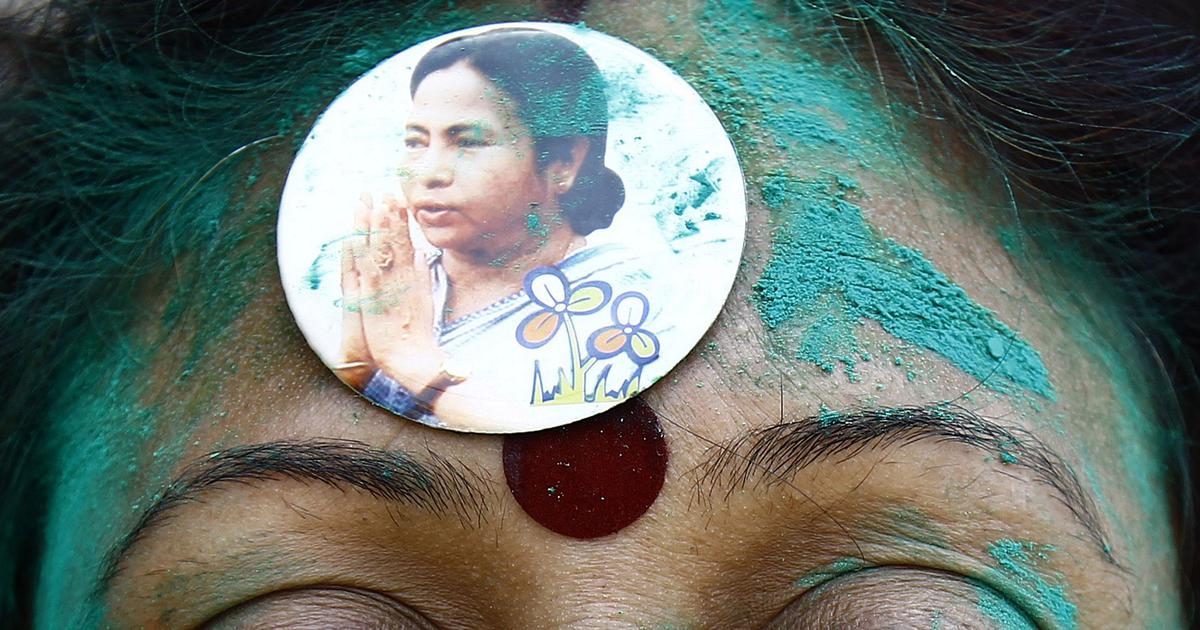
For West Bengal, Mamata Banerjee is Didi – the elder sister. After breaking through the red bastion in 2011 and ending the 34-year rule of the Left Front, she has not only held power uninterrupted but virtually dismantled the Left Front and held off a formidable challenge from the BJP.
Banerjee’s political rise began with the land acquisition protests in Singur and Nandigram in 2006, where she led farmer-led agitations against the Left Front government’s push to acquire land for industrial use. These protests propelled her to the forefront of state politics but also halted Bengal’s nascent industrial resurgence. The fallout left Singur, Nandigram and much of Bengal caught in a time warp.
Ahead of the 2024 general election, I travelled to Singur to gauge whether residents now regret the lost industrial opportunity. Were they disillusioned with Banerjee after more than a decade in power? The answer was nuanced. Many men lamented the lack of jobs and said their children had to either leave the state or depend on public doles and informal work. The women, in contrast, remained fiercely loyal to their Didi.
“It is not Didi’s fault,” they said in unison.
Everyone in West Bengal loves Didi, but women feel particularly devoted to her. Her schemes – Kanyashree, which aims to encourage girls to continue their education and discourage underage marriages; and Lakshmir Bhandar, which provides a monthly cash assistance of Rs 1,000 to women – laid the foundation of her sturdy bond with women, but are only one part of the equation. They worship Didi because she is an intrepid fighter, a woman unafraid to take to the streets in this man’s world. They relate to Didi because she dresses in the most endearingly common way, in unostentatious white cotton sarees and Hawaii chappals – simple rubber slippers. And they admire her no-holds-barred, uninhibited style.
Interestingly, Mamata Banerjee is among the very few state Opposition leaders who have been able to buck the “our leader in the state, but Modi in the centre” trend, winning 29 of the 42 parliamentary seats in the state in 2024, leaving the BJP far behind at just 12. Marching ahead of Narendra Modi in a general election is no small feat, especially when confronted by another Opposition alliance – the Left Front and Congress together. And women have been the backbone of her endurance. Consider the 2024 CSDS–Lokniti post-poll survey data: A majority of women – a healthy 53% – voted for Mamata, a comprehensive lead over the BJP, which managed 33% of the women’s vote. The Left Front, meanwhile, lagged far behind at a mere 5%.
While the significant 27% Muslim population has certainly helped the West Bengal chief minister consolidate her hold over the state in the face of the BJP’s Hindutva politics, the beauty of Banerjee’s popularity among women is that it cuts across religious, caste, and class divides.
Banerjee showcases how she understands women’s constraints – along with those of other marginalised sections – and addresses them with simple but effective initiatives. Her flagship Duare Sarkar (government at your doorstep) is a case in point. Duare Sarkar is essentially a government outreach programme that aims to make existing crucial public services more accessible. The government sets up camps in various localities at the municipal ward and Gram Panchayat levels where people can directly approach officials for enrolment in schemes or for similar concerns. Born out of manpower shortages in the administration and the constraints of the less-advantaged in accessing the system, the scheme has been a huge hit among various marginalised sections, especially women.
But Banerjee’s women’s outreach is not limited to schemes. She also puts a premium on enabling greater female participation in politics, following in the footsteps of stalwarts like MGR and NTR.
Of the 8,338 candidates across 543 constituencies in the 2024 Lok Sabha polls, only 797 – just 10% –were women. The Trinamool Congress, however, nominated 11 women of its total 42 candidates in the state. At 26%, this was far higher than the national average. All 11 of them won. This makes Mamata Banerjee’s party third in terms of women’s representation in the Lok Sabha, behind only the two big national parties: the BJP and the Congress.
A woman-led political party actively enabling more women to enter electoral politics shows a real intent to walk the talk, and this helps gain the trust of the female electorate.
It is, therefore, Mamata Banerjee’s rounded and curated approach towards women – a cocktail of targeted welfare delivery, empowerment through political and electoral channels, and her own mother-like persona – that has boosted her appeal among them.
Over a cup of kadak chai on a rainy Sunday morning, Trinamool Congress leader Sushmita Dev spoke at length about Banerjee and her deeply fascinating relationship with women voters. She said that women connect with Banerjee straight away, and not just because she is a woman chief minister. It is also because they look at her as a mother figure and believe she will never betray them. Seemingly small gestures from Banerjee, for instance, women being the first to be invited to her public meetings, go a long way in endearing her to them.
But something could be churning for Mamata after the brutal rape and murder of a 31-year-old postgraduate trainee doctor in the state-run RG Kar Medical College and Hospital, and the state administration’s dismal handling of the tragedy. For a woman chief minister, the negligent handling of such a heinous crime in a state-run facility is a serious blot. Banerjee’s belated scrambling to introduce new legislation as a face-saver is a textbook case of too little, too late. To add to it, the alleged gang rape of a 24-year-old law student inside a college campus has further raised more questions about the law-and-order situation in the state and the administration’s seriousness in ensuring a safe environment for women.
Banerjee, however, is quite adept at weathering storms. The Sandeshkhali violence – involving multiple allegations of sexual assault and land grabbing against local strongman and then TMC leader Shahjahan and his aides – had little bearing on Banerjee’s electoral fortunes in the 2024 Lok Sabha polls, despite the much-publicised case erupting just before election, inviting a combative Opposition’s wrath and bringing the party some terrible press.
Whether or not Banerjee manages to ride out this storm and retain her bond with the women electorate, she will always remain a prescient case study in building a formidable personality cult.
Afshan, who has travelled from her home state of West Bengal to study at the prestigious AMU in western Uttar Pradesh, shows that you can take a Bengali woman out of Bengal, but you can’t take the devotion for Mamata Banerjee out of a Bengali woman.
On an oppressive mid-April afternoon amid the bitter battle of the 2024 Lok Sabha polls, Afshan, a final-year master’s student at AMU, was passing by as her friends Hira Ahtashan and Alia Jabeen – both from Uttar Pradesh – talked about the election and the Yogi Adityanath government, and debated the Narendra Modi versus Rahul Gandhi question outside a small canteen on campus.
As they spotted Afshan, they called her over to join the conversation.
Afshan didn’t care much about Yogi Adityanath’s electoral fate or the Modi-versus-Rahul debate. She came straight to the point: Mamata Banerjee. “I like only Didi. We feel safe there. I never had to worry about stepping out in the evenings. Of course, there are exceptions and crimes do happen. But that is not the trend there,” she said.
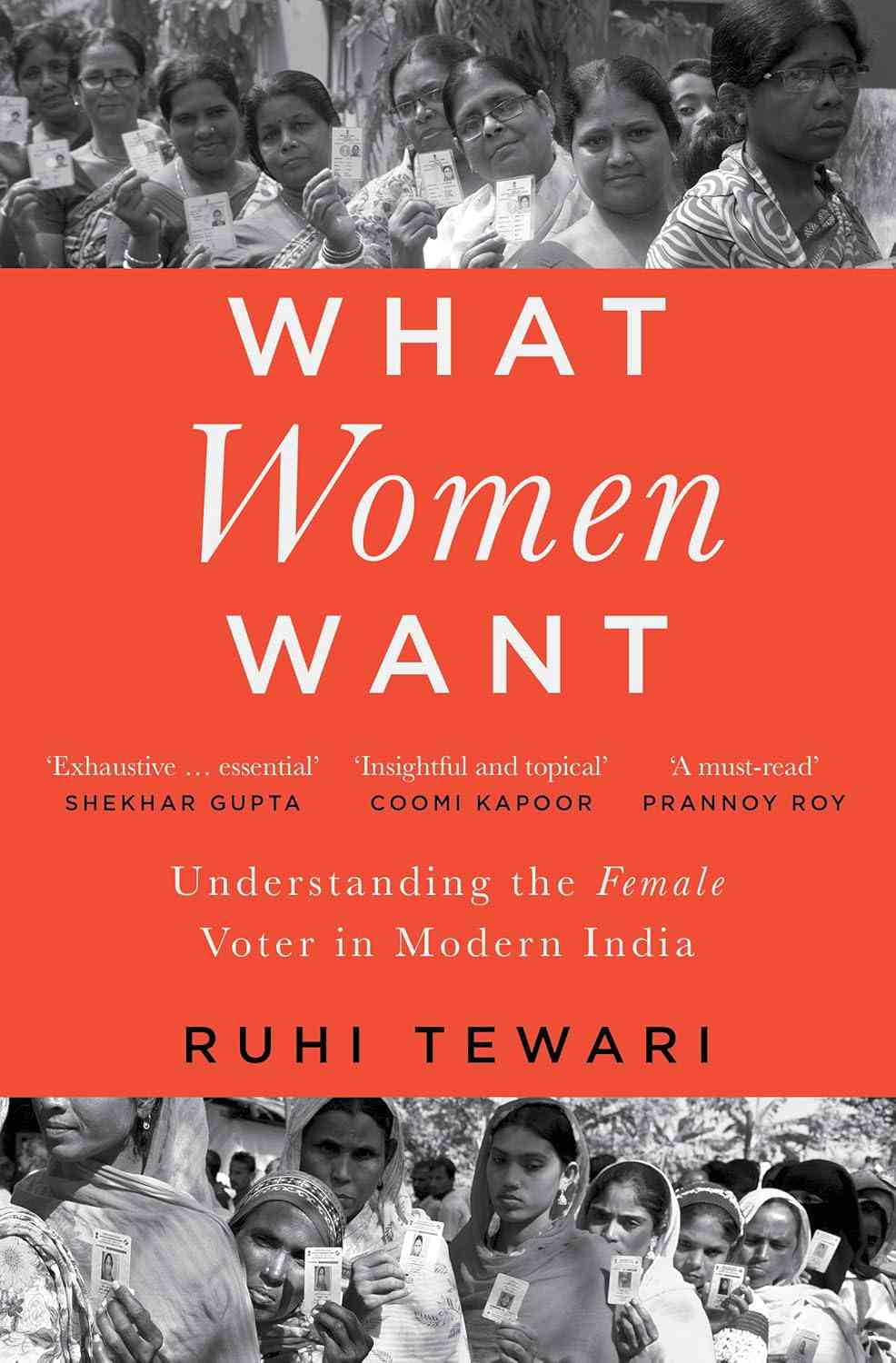
Excerpted with permission from What Women Want: Understanding The Female Voter in Modern India, Ruhi Tewari, Juggernaut.
